
The area of photonics has experienced remarkable improvements, especially in the advancement of different modulators that play crucial roles in numerous optical applications. Amongst these, fiber acousto-optic modulators (AOMs) and their several variations, such as space AOMs and free-space AOMs, stand out due to their convenience and effectiveness.
One of one of the most in-demand attributes in laser technology is ultra-narrow linewidth, frequently related to single-frequency lasers. These lasers produce light with an extremely narrow spectral width, making them suitable for various elaborate applications, consisting of coherent communication systems and high-resolution spectroscopy. A fiber-coupled AOM, which incorporates the AOM into a fiber optic system, provides smooth combining with single-frequency fiber lasers. This integration shows the trend towards increased compactness and effectiveness in optical systems without compromising efficiency.
The energy of fiber optic delay lines can not be overemphasized, especially in developing advanced optical systems that need specific timing and synchronization. These delay lines harness the fundamental homes of fiber optics to take care of light signals efficiently, enabling scientists and engineers to explore high-speed information transmission or elaborate timing experiments with very little loss of integrity. The electric optical fiber delay line acts as a main part in this context, facilitating the control of light signals to match certain requirements.
Check out free space aom the latest innovations in photonics, concentrating on the important duty of fiber acousto-optic modulators in improving laser applications, telecoms, and precision optical systems for diverse markets.
Modulators are essential in laser systems, playing a crucial function in changing continual wave outputs right into pulse formats. Acousto-optic Q-switch modulators offer this exact objective, enabling quick modulation of laser outcomes, which results in high-peak power pulses.
The distinction in between acousto-optic switches and modulators is a vital aspect of understanding just how these devices operate in different situations. In comparison, a modulator readjusts the light’s residential properties, directly influencing the beam’s qualities.
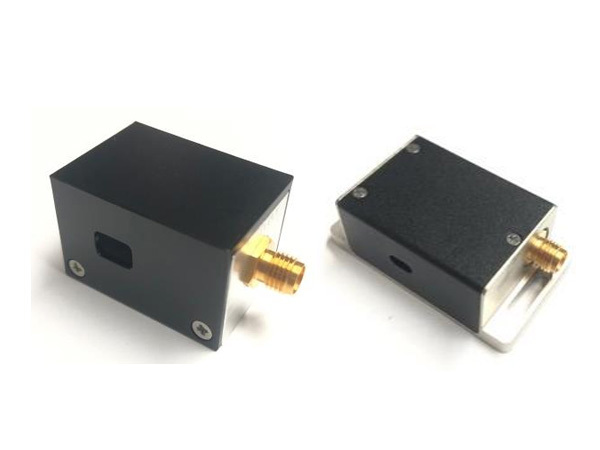
Acousto-optic devices have actually progressively acquired traction in the marketplace, driven by the rising demand for innovative optical technologies. The acousto-optic modulator market is seeing considerable development as a result of applications in telecoms, armed forces systems, and industrial production. These devices are essential for frequency shifting, light beam guiding, and signal processing. As technology develops, companies are establishing ingenious remedies to deal with the demands for miniaturization, enhanced performance, and cost-effectiveness.
Narrow linewidth fiber lasers show stable exhaust with very little spooky spread, catering to applications in fiber-optic communications and noticing modern technologies. Combining these fibers with advanced modulators makes it possible for scientists to check out brand-new frontiers in optical communication systems.
Acoustic optical deflectors add to the versatility of optical systems, supplying a way to adjust light dynamically and effectively by making use of acoustic waves as the regulating mechanism. Such devices can be found in different applications, from laser scanning systems to innovative imaging methods. By making use of the principles of acousto-optics, these deflectors help in achieving specific and fast modifications in the beam of light’s trajectory without the demand for complicated mechanical components.
In exploring the sorts of pulse modulation, one understands the complexities and variety inherent in the area. Pulse modulation techniques, such as pulse-width modulation (PWM) and pulse-position modulation (PPM), permit adjustment of light based upon emission to create differing signal types. These methods promote developments in photonics and electronic devices, from managing laser outcomes to boosting the efficiency of fiber optic systems.
Further consideration of optical passive components discloses their vital function in improving system integrity. These components, that include isolators, filters, and couplers, promote the company and administration of light within complicated optical setups without the need for energetic participation. Their payment to overall system efficiency is important, mainly when integrated with modulators and various other vibrant optical devices. Especially, the smooth integration of passive and active components specifies the capability of modern photonic systems.
The growing emphasis on space applications highlights the demand for trusted and robust optical systems that can function efficiently in extreme conditions. Space acousto-optic modulators, in certain, suit the special demands of space missions, where factors such as radiation exposure and temperature variations can significantly impact capability. The development of space-grade acousto-optic devices makes certain that interaction and data collection remain uninterrupted in the severe settings of space.
Acousto-optic Q-switching stands for one of the most efficient approaches of generating high-energy pulses, crucial for applications ranging from laser marking to clinical treatments. The modulation abilities inherent in AOMs enable them to adjust to varying demands, enhancing pulse duration and power result. Consequently, they give an ingenious path to boost laser applications across diverse areas.
As we dig further into the future of photonics, it comes to be significantly clear that technology in laser modulators and acousto-optic modern technologies is crucial. The advancements in modulator drivers improve the effectiveness with which EOMs and aoms operate, enabling faster and extra trustworthy efficiency. The crossover between developments in modulation and the raising demand for higher transmission capacity and lower latency in communication systems recommends a future abundant with possibilities for reinforced optical interactions.
Recognizing the basic auto mechanics that underpin acoustic optical modulators will certainly bring about superior design and efficiency improvements as research remains to prosper. The exploration of new products, assimilations, and methods in locations like micro-nano fabrication will likely generate devices with even better control and extended functional lifetimes. These advancements not just promise improved capability for existing systems however welcome totally brand-new applications within emerging technologies in quantum computing, robotics, and advanced manufacturing.
In recap, the domain of acousto-optic modulators and relevant fiber-optic innovations symbolizes quick development and complexity, working as fundamental elements within numerous modern-day optical applications. With the expanding demand for precision and high efficiency in numerous industries, the development of acousto-optic devices, such as fiber AOMs, proceeds to develop, adapting to brand-new difficulties and opportunities. As researchers and designers press the boundaries of technology, these devices will certainly stay central to shaping the future of optical communication, laser applications, and beyond, heralding a brand-new era of technical development.